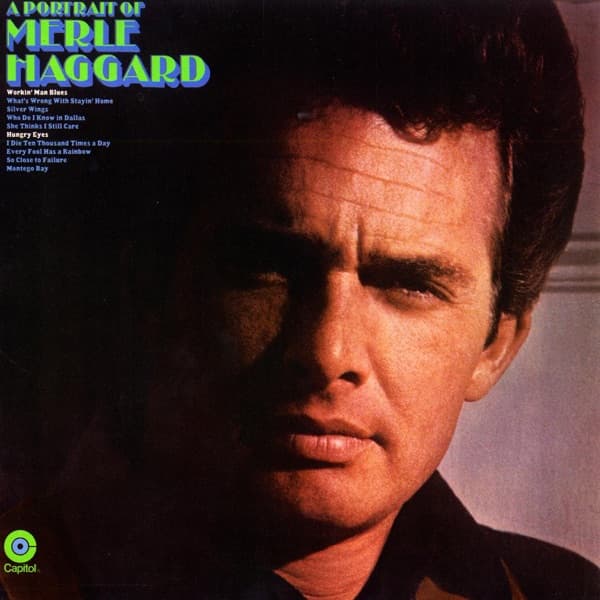
A Portrait of Merle Haggard Guitar Tone - Amp Settings for Every Track
Translate any A Portrait of Merle Haggard track to your gear
Median knob positions across the 2 guitar tracks we've broken down from this record, on the amps they were tracked with. A starting point for the album's sound; pick a track below for its exact recipe.
- Gain
- 4
- Bass
- 5
- Mid
- 6
- Treble
- 7
- Presence
- 6
- Volume
- 6
The Gear Behind A Portrait of Merle Haggard
Every A Portrait of Merle Haggard Tone You Can Dial In
2 of this record's tracks are broken down so far. Most popular first.
Common Questions About the A Portrait of Merle Haggard Tone
What amp was A Portrait of Merle Haggard recorded with?
Every one of the A Portrait of Merle Haggard tracks in our catalog was tracked on a Twin Reverb (modern equivalent: Fender '65 Twin Reverb Reissue). ToneMirror rewrites those settings for whatever amp you own - a different EQ curve and gain structure landing on the same recorded sound.
What guitar was used on A Portrait of Merle Haggard?
The Telecaster (modern equivalent: Fender American Vintage II 1963 Telecaster) appears on the most A Portrait of Merle Haggard tracks in our catalog. You don't need one - the settings are calibrated to the recorded tone, so they translate to the guitar you already have.
What amp settings do I need for the A Portrait of Merle Haggard sound?
Across the 2 guitar tracks from A Portrait of Merle Haggard we've catalogued, the median is gain 4 (range 4–4), with bass 5, mid 6, treble 7 on a 0–10 scale. That's the record's window rather than any one song's recipe - pick a track above for the exact knob positions it was recorded with.
How many A Portrait of Merle Haggard songs can I dial in here?
ToneMirror has 2 tracks from A Portrait of Merle Haggard broken down, including "Workin' Man Blues" and "Silver Wings". Each carries the original amp settings, pickup position, tuning, and pedal chain, plus a per-rig adaptation for your own gear.