How to Dial In "Dixie Fried" by Carl Perkins - Guitar Tone Settings
Gear for "Dixie Fried"
Suggested rig · the original isn't documented.
Knob Positions, Pickup, and Tuning
Where to set the knobs for this tone. Each value is on the standard 0–10 amp scale.
On your amp, these numbers won't sound the same.
Get the settings for my ampHow the artist had their guitar configured for this take.
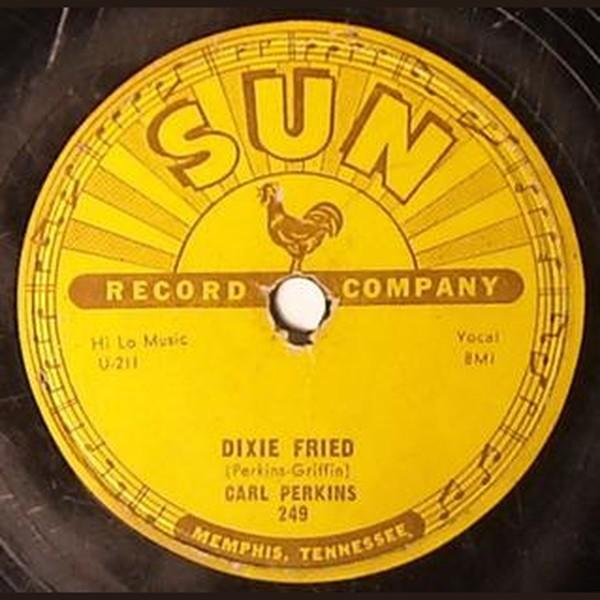
Carl Perkins wrote it with Howard "Curley" Griffin, a singer and disc jockey from Jackson, Tennessee, and Sun released it in August 1956 (Sun 249) with "I'm Sorry, I'm Not Sorry" on the B-side. It reached number 10 on the Billboard country and western chart, and its "rave on" refrain was later borrowed for Sonny West's "Rave On", which Buddy Holly made famous. No source names the guitar, amp or effects. Play the rockabilly fills on the bridge pickup with the amp clean but pushed, and keep the rhythm tight. No transcription could be checked, so no tuning is given.
Common Questions About the "Dixie Fried" Tone
What guitar did Carl Perkins use on "Dixie Fried"?
The guitar on "Dixie Fried" (released 1956) isn't documented; the Gibson 1955 Les Paul Goldtop Reissue above gets the sound. Pickup selector: bridge pickup on the guitar.
What amp settings does "Dixie Fried" need?
Settings for this sound: Gain 3.5, Bass 5, Mid 6, Treble 6.5, Presence 6, Volume 6.5. Each value is on the standard 0–10 amp scale; match them on your amp first, then nudge to taste. ToneMirror can translate these positions for whatever amp you actually own.
Can I play "Dixie Fried" without the original gear?
Yes. ToneMirror takes the settings above and adapts it to your guitar, amp, and pedals - so you can chase the "Dixie Fried" tone on a Katana, a Helix, a tube combo, or anything else. The translation accounts for EQ curve, gain structure, and pickup type so the result actually sounds like the record, not just the same knob numbers on different gear.
More Tones You Can Dial In
Tone references for "Dixie Fried" by Carl Perkins are provided for educational use. ToneMirror is not affiliated with the artists or labels referenced.