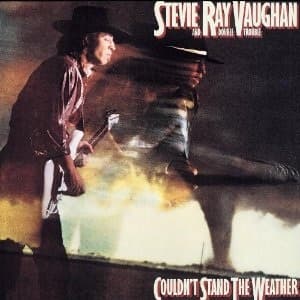
How to Dial In "Tin Pan Alley" by Stevie Ray Vaughan - Guitar Tone Settings
The Gear Behind "Tin Pan Alley"
- GuitarStratocasterModern equivalent: Fender American Vintage II 1961 Stratocaster
- AmpSuper ReverbModern equivalent: Fender '65 Super Reverb Reissue
- EffectRotary speakerFender Vibratone
- EffectChorusRoland Dimension D
Original Knob Positions, Pickup, and Tuning
Where to set the knobs for this tone. Each value is on the standard 0–10 amp scale.
These numbers are for a Super Reverb. On your amp, they won't sound the same.
Get the settings for my ampHow the artist had their guitar configured for this take.
E flat standard, and much lower gain than any other Vaughan tone in the catalogue — this is the slowest, quietest thing he recorded, and it works entirely on dynamics. Set the amp so a light touch is completely clean and only a hard-picked note breaks up; if it distorts at medium attack the whole performance flattens out. Recorded January 1984 at the Power Station in New York with John Hammond producing, basic tracks cut live with Vaughan in the room beside the drums and his amps in an isolation booth. His tech has described the setup as two EV-loaded blackface Super Reverbs plus an EV-loaded Vibroverb driving a Fender Vibratone rotating-speaker cabinet, with a Roland Dimension D added at mixdown for a subtle chorus thickening. Vaughan's very heavy strings are part of the sound: they resist enough that his hardest notes bloom rather than compress. The take is the first day's warm-up — Chris Layton's opening floor-tom roll was not meant to be kept.
Common Questions About the "Tin Pan Alley" Tone
What guitar did Stevie Ray Vaughan use on "Tin Pan Alley"?
Stevie Ray Vaughan tracked "Tin Pan Alley" on a Stratocaster (released 1984). The Fender American Vintage II 1961 Stratocaster named above is a modern equivalent, not the guitar on the record. Pickup selector: neck pickup on the guitar. The track is in E♭ Standard (E♭ A♭ D♭ G♭ B♭ E♭), so retune before you dial anything in.
What amp settings does "Tin Pan Alley" need?
On a Super Reverb: Gain 3.5, Bass 5, Mid 6.5, Treble 6, Presence 5.5, Volume 6. Each value is on the standard 0–10 amp scale; match them on your amp first, then nudge to taste. ToneMirror can translate these positions for whatever amp you actually own.
Can I play "Tin Pan Alley" without a Super Reverb?
Yes. ToneMirror takes the original recipe above and adapts it to your guitar, amp, and pedals - so you can chase the "Tin Pan Alley" tone on a Katana, a Helix, a tube combo, or anything else. The translation accounts for EQ curve, gain structure, and pickup type so the result actually sounds like the record, not just the same knob numbers on different gear.
What effects are on "Tin Pan Alley"?
The recording has rotary speaker and chorus on it. ToneMirror maps each effect onto your rig - a pedal you own, your amp's own controls, or a block on a modeler - and says plainly when your rig can't make one.
More Tones You Can Dial In
Tone references for "Tin Pan Alley" by Stevie Ray Vaughan are provided for educational use. ToneMirror is not affiliated with the artists or labels referenced.