

In this guide · 9 sections
- 1Chorus vs phaser vs flanger vs vibe vs tremolo: how they differ
- 2Rate, depth, mix and feedback: the controls explained
- 3Starting settings for chorus, phaser, flanger, vibe and tremolo
- 4Settings by era: 70s phaser, 80s chorus and grunge clean chorus
- 5Where modulation goes: before or after drive, and in the loop
- 6The modulation pedals on the records
- 7The shortcut: modulation settings for a specific song
- 8Songs to try it on
- 9FAQ
Chorus, phaser and flanger all sweep your sound with a slow oscillator, but differently: chorus blends in a slightly delayed, detuned copy for a shimmering double, a phaser sweeps notches through your tone for a swirl, and a flanger uses a very short delay with feedback for a jet-plane whoosh. Tremolo pulses the volume; vibrato bends the pitch. Start with the rate slow and the depth around halfway, and put them after your drives.
- Chorus, flanger and vibrato are delay-based; phasers and Uni-Vibes are filter-based; tremolo changes volume, not pitch.
- Rate is the speed of the sweep and depth is how far it moves - most classic sounds use a slow rate.
- Feedback (regen or resonance) is what makes a flanger or phaser sound metallic and dramatic.
- After the drives, modulation sounds clear and defined; a phaser or vibe in front of a cranked amp gives the 70s throb.
- Sync tremolo to the song: divide the BPM by 60 for quarter-note pulses per second, by 30 for eighths.
Chorus vs phaser vs flanger vs vibe vs tremolo: how they differ
Every modulation pedal has a low-frequency oscillator (LFO) moving something back and forth a few times a second. What it moves decides the effect, and the six common ones fall into three groups.
- Delay-based:chorus, flanger and vibrato copy your signal, delay the copy by a few milliseconds, and wobble that delay time, which wobbles the copy's pitch.
- Filter-based: phasers and Uni-Vibes shift the phase of part of your signal and blend it back, cutting moving notches into your tone. No pitch change, just a sweep.
- Volume-based: tremolo turns your level up and down. Nothing else changes.
| Effect | What it does | What it sounds like | Classic use |
|---|---|---|---|
| Chorus | Blends a copy delayed about 15-35ms with a moving delay time | A shimmering double, like two guitars slightly out of tune | 80s cleans, grunge arpeggios, new wave |
| Flanger | A copy delayed only a few milliseconds, fed back on itself | A metallic jet-plane whoosh | Riff accents, late-70s and 80s rock |
| Phaser | All-pass filter stages sweep notches through the tone | A smooth, liquid swirl | 70s rock rhythm, funk, psychedelia |
| Uni-Vibe | A phaser with uneven stages, built to imitate a rotating speaker | A lopsided, throbbing pulse | Late-60s and 70s blues-rock leads |
| Vibrato | A chorus with no dry signal - only the pitch-wobbled copy | A warbling pitch bend | Lo-fi indie, subtle pitch movement |
| Tremolo | Moves the volume up and down | A rhythmic pulse or chop | Surf, country, swampy blues, indie |
Rate, depth, mix and feedback: the controls explained
Rate (speed)
How fast the LFO sweeps. Slow rates sound lush and musical; fast rates sound like a warble or a Leslie at full spin. Most classic chorus, phaser and flanger sounds sit in the first third of the knob. If a pedal sounds seasick, turn the rate down before anything else.
Depth (width, intensity)
How far the sweep travels. On a chorus, more depth means more detuning; on a flanger it widens the sweep. Deep settings with a slow rate are dreamy; deep settings with a fast rate are a special effect.
Mix (level, blend)
The balance of the effect against your dry signal. Many classic pedals have no mix knob at all - Boss's CE-2 chorus has only rate and depth, with the blend fixed inside. Where you have one, a lower mix keeps your note centered while the effect moves around it.
Feedback (regen, resonance, color)
Sends part of the effected signal back through again, sharpening the sweep. Low feedback is smooth; high feedback is the whistling, metallic sound of a flanger at full regen. MXR's script-logo Phase 90 is smoother than the later block-logo version, which adds feedback, and Electro-Harmonix's Small Stone has a color switch that does the same.
Manual and tempo
A flanger's manual knob sets the center of the sweep - the pitch of the whoosh. Turn the rate to zero and the manual knob alone gives a fixed, hollow filter. For tremolo, sync the rate to the song: the BPM divided by 60 gives quarter-note pulses per second, and divided by 30 gives eighths, so 120 BPM is 2Hz or 4Hz. Pedals with tap tempo do it for you.
Starting settings for chorus, phaser, flanger, vibe and tremolo
| Effect | Rate | Depth | Mix | Feedback | Listen for |
|---|---|---|---|---|---|
| Subtle chorus | 9-10 o'clock | 10-12 o'clock | 30-50% | - | Shimmer, not wobble |
| Lush 80s chorus | 10-11 o'clock | 1-2 o'clock | 50%, stereo if you can | - | A wide, glassy double |
| Phaser | 9-11 o'clock | Full | Fixed | Low to medium | A slow swirl under the notes |
| Flanger | 8-10 o'clock | 1-3 o'clock | Fixed | 1-2 o'clock | A jet sweep every few seconds |
| Uni-Vibe | Slow to medium | 2-4 o'clock | Chorus mode | - | A lopsided throb |
| Vibrato | 11-1 o'clock | 9-11 o'clock | 100% wet | - | Gentle pitch warble |
| Tremolo | Synced to tempo | 50-70% (100% to chop) | - | - | A pulse locked to the drums |
Chorus
Subtle chorus thickens a clean part without announcing itself; push the depth for the obvious, glassy 80s sound. Chorus on a distorted rhythm part fights the gain - if you want it there, keep the depth low, or run it in the effects loop.
Phaser
A four-stage phaser like the Phase 90 is subtle and vocal; pedals with eight or more stages cut more notches and sound more dramatic. On rhythm, a slow rate turns sustained chords into a gentle swirl. A faster rate on clean, muted funk chords gives a bubbling pulse.
Flanger
Set the rate slow enough that you hear one sweep per bar or two, then use the manual and regen to place the whoosh. Flangers are an accent - on all the time, they tire the ear. Electro-Harmonix's Electric Mistress adds a filter matrix mode that freezes the sweep in place.
Uni-Vibe and rotary
The original Uni-Vibe had its speed on a treadle and a chorus/vibrato switch; chorus mode blends in the dry signal and is the setting most players use. Set the intensity high and the speed slow. For a true rotating speaker - the Leslie sound - use a rotary pedal instead.
Tremolo and vibrato
A smooth sine-wave tremolo at moderate depth gives the classic amp pulse; a square wave at full depth chops the sound on and off. Vibrato wants restraint: a little warble sounds like a worn tape, a lot sounds out of tune.
Common mistakes
- Rate too fast. The most common one, and the reason modulation gets called cheesy.
- Stacking effects. Chorus into flanger into phaser is mush. Pick one per part.
- Leaving it on everywhere. Modulation works best when it changes between sections - a chorused verse against a dry, driven chorus.
- Ignoring the level. Some modulation pedals change your volume when engaged. Match it to bypass so the effect is not mistaken for a boost.
Settings by era: 70s phaser, 80s chorus and grunge clean chorus
Late-60s and 70s vibe and phaser
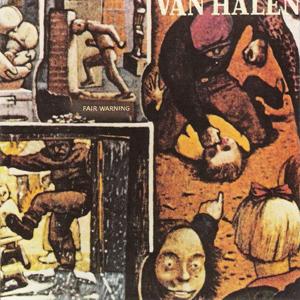
A Uni-Vibe into a cranked Marshall is the sound of Jimi Hendrix's “Machine Gun” with the Band of Gypsys, where it followed a Fuzz Face, and of Robin Trower's “Bridge of Sighs”: slow speed, high intensity, neck pickup. A few years later, Eddie Van Halen's MXR Phase 90 on “Eruption” set the template for a phaser into a cranked amp. Keep the speed slow, around 9 o'clock, so the swirl moves under the riff instead of over it.
Late-70s and 80s flanger and chorus
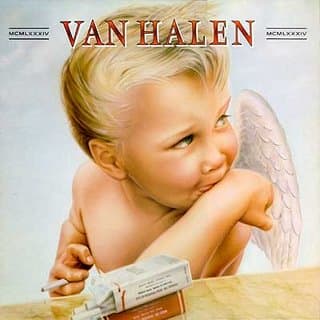
The flanger sweep on Van Halen's “Unchained” is the classic riff accent: slow rate, high regen. Then chorus took over. Through the 80s it was on clean arpeggios, ballad cleans and solos, often in stereo across two amps - from the shimmering arpeggios of new wave to the clean intros of 80s metal. Use a medium rate and generous depth, and keep the guitar itself bright. The 80s rock tone guide covers the rest of that rig, and new wave is full of chorused cleans.
Grunge clean chorus
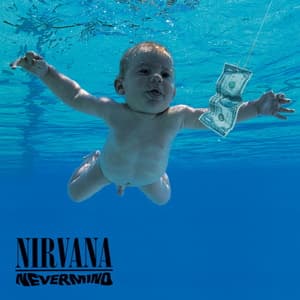
The 90s version is darker and deeper. Kurt Cobain's Electro-Harmonix Small Clone on Nirvana's “Come As You Are”is the model: a slow, deep chorus on the neck pickup with the guitar's tone rolled back, into an amp on the edge of breakup. The result is watery rather than glassy. The grunge tone guide covers the drive side.
Tremolo across the decades
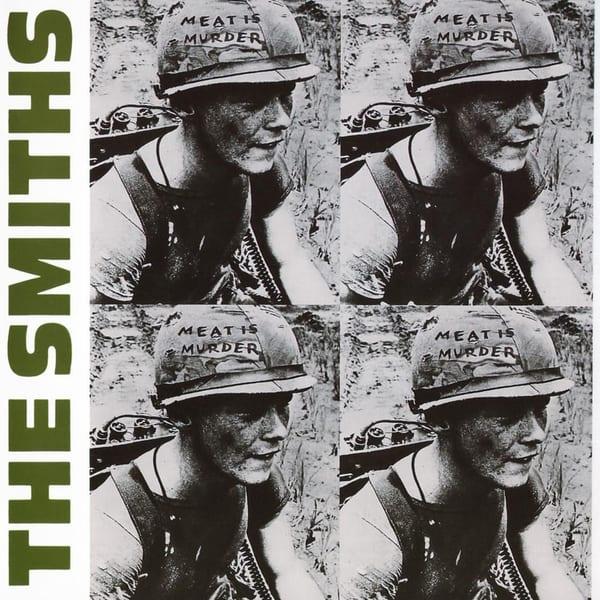
Tremolo has never gone out of style: surf and country records used the amp's own, and indie revived it. For a pulse like the one driving The Smiths' “How Soon Is Now?”, set a fast, deep, tempo-synced tremolo and let it run.
Where modulation goes: before or after drive, and in the loop
The convention puts modulation after the drives and before delay and reverb. There, chorus and flanger sound clear and defined, because they move a finished tone. The full chain is in the pedal order guide; these are the choices specific to modulation.
- Phaser or vibe before the drive gives the throaty, swirling 70s sound - the distortion smooths the sweep into the tone. After the drive the same pedal sounds more obvious and synthetic.
- Flanger before the drive is more aggressive and resonant; after it, the sweep is cleaner and more pronounced. Van Halen ran both phaser and flanger in front of a Marshall with no effects loop.
- Chorus almost always belongs after the gain. In front of a high-gain amp it turns to mush, so put it in the effects loop.
- Tremolo goes late, so it pulses the whole tone. Before the delay and reverb, the trails stay smooth; after them, it chops the trails too.
The modulation pedals on the records
Chorus is the most credited modulation effect by a wide margin, and Boss's CE-2 sits at the top of the list. MXR's Phase 90 is the most credited phaser, followed by more Boss choruses, then flangers. Tremolo pedals are rare on the list because recorded tremolo mostly came from the amp itself.
- 1Boss CE-2 Chorus1,305 tones
- 2MXR Phase 90318 tones
- 3Boss CE-2W Waza Craft Chorus156 tones
- 4Boss CH-1 Super Chorus65 tones
- 5Electro-Harmonix Stereo Electric Mistress41 tones
- 6Boss CE-5 Chorus Ensemble29 tones
- 7MXR M117R Flanger24 tones
- 8MXR M234 Analog Chorus21 tones
The takeaway for your board: one chorus and one phaser cover most modulation on records, and a tremolo only if your amp lacks one. A multi-modulation pedal is a good space-saver, and most modelers carry every effect here. The tone glossary defines any terms on the boxes you are comparing.
The shortcut: modulation settings for a specific song
The hard part is rarely knowing what a chorus is; it is knowing whether a record has chorus or a phaser, how deep, and how to get it from the pedal you own - or from a different pedal when you do not own the right one. ToneMirror answers that per song. Pick the track, enter your guitar, amp and pedals, and it returns rate and depth settings for your modulation pedals alongside the amp knobs, pickup and tuning, in signal-chain order.
If the record has an effect you cannot make, it tells you and names the kind of pedal that would cover it. On modelers it lays out the blocks to build. Start from the tone matcher, or open a song in the tone library.
Songs to try it on
Each of these has its recorded rig and settings on its own page - open one, then get it translated for your gear.

Frequently asked questions
What is the difference between chorus, phaser and flanger?
Chorus blends in a slightly delayed copy of your signal with a wobbling pitch, which sounds like two guitars slightly out of tune. A phaser sweeps notches through your tone with filters, which sounds like a smooth swirl. A flanger uses a much shorter delay with feedback, which gives the metallic jet-plane whoosh.
What are good chorus pedal settings?
Start with the rate around 9-10 o'clock and the depth around noon for a subtle shimmer on clean parts. For the lush 80s sound, raise the depth to 1-2 o'clock and run in stereo if you can. If it sounds seasick, the rate is too fast.
Should chorus go before or after distortion?
After, in most rigs, so it modulates the finished tone. If your amp's preamp makes the distortion, put the chorus in the effects loop. Phasers and Uni-Vibe-style pedals are different - many players put them before the drive for a smoother, throatier sweep.
Is a Uni-Vibe a chorus or a phaser?
A phaser. Despite its chorus/vibrato switch, a Uni-Vibe works by shifting phase through four uneven filter stages, which was designed to imitate a rotating Leslie speaker. Its chorus mode blends in the dry signal; its vibrato mode is the effect alone.
How do I set tremolo to the tempo of a song?
Divide the song's BPM by 60 for quarter-note pulses per second, or by 30 for eighth notes. At 120 BPM that is 2Hz or 4Hz. If your tremolo has tap tempo, tap quarter notes and choose the subdivision.
Is there an app that tells me the chorus or phaser settings for a song?
ToneMirror does this as part of its tone matching. Enter a song and the gear you own, and it returns settings for your modulation pedals along with amp knobs, pickup and tuning - or tells you what kind of pedal the record needs if you do not own one.