


In this guide · 10 sections
- 1Why the Telecaster bridge pickup is the country sound
- 2Amp settings: a clean Fender-style amp with headroom
- 3Compression: the squash that makes notes pop
- 4Slapback delay and reverb settings
- 5Chicken pickin' and hybrid picking
- 6Steel-guitar bends and the B-bender
- 7Modern country: more gain, humbuckers and crunch
- 8The shortcut: country settings for your rig
- 9Songs to try it on
- 10FAQ
For a country guitar tone, play a Telecaster-style bridge pickup into a clean Fender-style amp with plenty of headroom: gain low enough that hard-picked notes stay clean, bass around 4-5, mids 5-6 rather than scooped, and treble 6-7. Add a compressor at unity gain for snap and sustain, a single slapback repeat around 90-130ms, and hybrid picking so notes pop. For modern country, add a low-gain overdrive or a humbucker guitar.
- The Telecaster bridge pickup is the twang: bright and thin on its own, which is exactly why it cuts through a band.
- Keep the amp clean or at the very edge of breakup, with the mids a notch above the bass - not scooped.
- A compressor and a one-repeat slapback around 90-130ms are the two pedals that make it sound like a record.
- Chicken pickin' is a hand technique - hybrid picking plus fretting-hand muting - not a pedal.
- Modern country adds crunch with a low-gain overdrive or a humbucker guitar, but keeps the pick attack clear.
Why the Telecaster bridge pickup is the country sound
Country guitar's signature is twang: a bright, snappy attack with a quick pop on every note and a short, clear sustain behind it. Most of it comes from one place - the bridge pickup of a Fender Telecaster, the guitar that has defined country lead playing since the 1950s.
The Tele's bridge pickup is a bright single coil, angled and mounted in a metal bridge plate right next to the saddles. That close to the bridge, a string's upper harmonics are strongest, so the pickup hears a lot of attack and very little low end. On its own it can sound thin. In a band with bass, piano, fiddle and steel guitar, that thinness is why it cuts through without stepping on anyone.
The lineage runs from James Burton's records with Ricky Nelson through 1960s Bakersfield - Don Rich with Buck Owens, Roy Nichols with Merle Haggard on “Workin' Man Blues” - to the Nashville session players and modern pickers such as Vince Gill and Brad Paisley. The honky-tonk, Bakersfield and neotraditional end of the genre is where the clean Tele sound lives:
 My Wife Thinks You're DeadJunior Brown · 1993Settings & rig
 I Never LieZach Top · 2024Settings & rig
 Dance the Night AwayThe Mavericks · 1998Settings & rig
 Guitars, CadillacsDwight Yoakam · 1986Settings & rig
 you look like you love meElla Langley · 2024Settings & rig
 Don't Rock the JukeboxAlan Jackson · 1991Settings & rig
No Telecaster? Getting twang from other guitars
- Stratocaster: the bridge pickup is the closest match, a little less snappy. Position 2 (bridge and middle) gives a softer, rounder twang for rhythm.
- Humbuckers:split the bridge pickup if your guitar can. If not, roll the guitar's volume back to 7 or 8 and add a notch of treble at the amp - a full humbucker pushes the amp toward breakup and rounds off the snap.
- Hollow-bodies:a Gretsch-style guitar gives the rounder, more resonant twang of rockabilly and Chet Atkins' records rather than the Tele's bite.
Whatever the guitar, leave its tone knob on 10. Twang is treble you keep, not treble you add later.
Amp settings: a clean Fender-style amp with headroom
The classic country amp is a blackface-style Fender - a Twin Reverb or a Deluxe Reverb - set clean or right at the edge of breakup. Headroom matters because twang lives in the attack. An amp that is already breaking up rounds off the pick snap, and the notes stop popping. Here is where recorded country tones sit:
Gain stays low, the mids sit a notch above the bass instead of being scooped, and the treble is the highest tone control. Use that shape as your starting point:
- Volume or gain: clean at your playing volume. On a non-master amp like a Deluxe Reverb that may be 3-4; a Twin stays clean far louder. A little hair on the hardest-picked notes is fine - that bark is on plenty of records.
- Bass 4-5. The bridge pickup is thin, but a Fender at volume has plenty of lows, and too much makes the low strings flub under the bass player.
- Mids 5-6. The mids give double-stops their body and keep the guitar audible between the fiddle and the steel. Scooping them is how a Tele ends up thin and quacky instead of twangy.
- Treble 6-7.Bright, but stop before it turns piercing. If it does, lower the amp's treble before you touch the guitar's tone knob, which dulls the snap.
- Reverb 2-3. A short splash of spring reverb, not a wash.
| Amp style | Why it suits country | Where to start |
|---|---|---|
| Blackface Twin-style | Huge clean headroom; stays snappy at stage volume | Volume 3-5, treble 6-7, reverb 2-3 |
| Blackface Deluxe-style | Smaller; breaks up sooner, with more bark on hard notes | Volume 3-4 for clean, 5 and up for edge of breakup |
| Tweed-style | Early, fat breakup for rockabilly and roots | Volume low - it gets dirty fast |
| Two-channel modern amp | Clean channel for twang, drive channel for modern crunch | Clean channel, gain low, master for loudness |
If your amp distorts before it gets loud enough, it has run out of headroom. The clean guitar tone guide covers how to buy more of it, and what changes between bedroom and band volume.
Compression: the squash that makes notes pop
A Telecaster bridge note spikes hard at the pick and then dies quickly. A compressor flattens the spike and lifts the decay, so hybrid-picked notes come out even, bends sustain, and chicken-picked notes get their squashed, popping attack.
- 1MXR Dyna Comp118 tones
- 2Boss CS-3 Compression Sustainer15 tones
- 3SoloDallas Schaffer Replica Storm13 tones
- 4Boss CS-2 Compression Sustainer12 tones
- 5Origin Effects Cali76 Compact12 tones
- 6Ross Compressor9 tones
The MXR Dyna Comp leads that list by a wide margin. Its fast, fixed attack gives the slightly squashed spank that has become part of the chicken-pickin' sound. Compressors with an attack control let more of the pick through when you want a more natural strum.
| Control | Chicken pickin' and leads | Rhythm and ballads |
|---|---|---|
| Sustain or ratio | Sustain 12-2 o'clock, or 4:1 to 8:1 | Sustain 9-11 o'clock, or 2:1 to 3:1 |
| Attack | Fast to medium - some squash is the sound | Medium to slow - keep the strum natural |
| Release | Medium | Medium to slow |
| Blend (if fitted) | 50-70% compressed | 30-50% compressed |
| Output | Unity, or a touch above for solos | Unity |
Slapback delay and reverb settings
Slapback is a single fast echo - one repeat, roughly 80 to 140 milliseconds behind the note - that makes a dry guitar sound bigger and bouncier without washing it out. It started on tape: at Sun Records in the 1950s, Sam Phillips ran the signal through a second tape machine, and the slap on Scotty Moore's guitar on Elvis Presley's “That's All Right” became the sound of rockabilly and, from there, a staple of country.
Setting a slapback
- Time 90-130ms.Shorter for faster songs. A sixteenth note at the song's tempo is a good target - at 120 BPM that is 125ms. The free delay calculator works it out from any tempo.
- Feedback at minimum, so there is exactly one repeat.
- Mix 20-35%. You should feel the slap more than hear an echo. If you can count it, it is too loud.
- Darker repeats sit better. A tape-style delay tucks the slap behind the note; a bright digital repeat can sound like you picked twice.
Longer delays for leads and ballads
For leads, a quarter-note or dotted-eighth delay with two or three repeats at 15-25% mix adds polish without blurring fast runs; on ballads, try 400-600ms at 15-20%. Delay goes after any overdrive so the repeats stay clean - see the delay pedal guide for the rest.
Reverb
The amp's spring reverb around 2-3 is the classic country splash. Keep it modest - a long tail muddies the steel and the vocal - and save bigger reverb for ballads.
Chicken pickin' and hybrid picking
Chicken pickin' is named after the clucking sound of muted, plucked notes, and it is a technique far more than a tone. The settings above make it easier - compression, a bright bridge pickup, a clean amp, a slap - but the cluck comes from your hands.
Hybrid picking
Hold the pick between thumb and index finger as usual, and use your middle and ring fingers to pluck the higher strings. The pick takes bass notes and single-note runs; the fingers take double-stops and accents. For the pop, hook the string with a fingertip and pull it slightly away from the fretboard so it snaps back against the frets.
The cluck
Rest a fretting-hand finger lightly on a string - touching, not pressing - and pluck it with your middle finger: you get a dead, percussive click. Alternate those muted clicks with fretted, snapped notes and you have the core pattern. Double-stops against open strings, banjo-style rolls across three strings and quick pull-offs to open strings fill out the vocabulary.
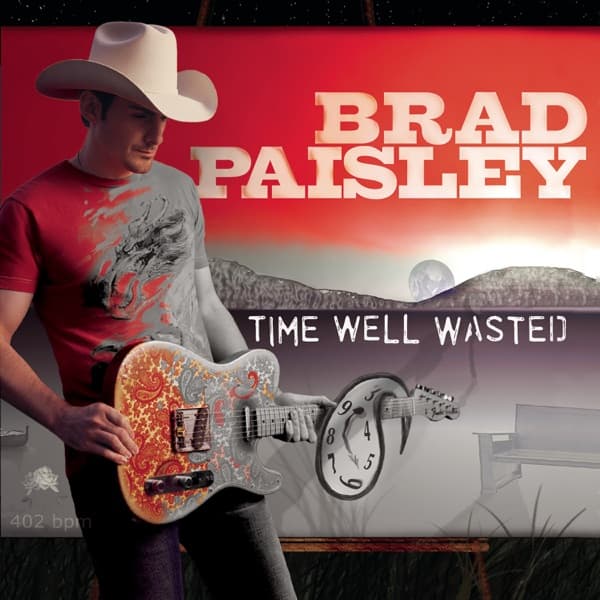
The reference players are well documented. James Burton, on Ricky Nelson's records, combined a flatpick with a fingerpick and strung his Telecaster with light banjo strings to make bends easier. Albert Lee's “Country Boy” is the speed showcase, and Brad Paisley carries the style on modern country radio.

Steel-guitar bends and the B-bender
Country lead guitar borrows constantly from the pedal steel. The trick is the oblique bend: bend one string up while the notes on the strings next to it stay put, so the harmony moves under a held note the way a steel's pedals move it.
- Try it in G: fret the B and high E strings at the 3rd fret (D and G) and the G string at the 2nd fret (A). Pick all three, then bend the G string up a whole step to B - the chord resolves to G major.
- Release slowly to fall back, and add a little vibrato to the held notes, not the bent one.
- Fade notes inwith the guitar's volume knob or a volume pedal so the pick attack disappears, the way a steel player swells.
The best teacher is a real steel player. Listen to the steel fills on a classic honky-tonk record and copy the shape of the moves rather than the notes: slow bends, held notes that ring through them, and swells instead of picked attacks. Keep the amp clean and the tone wide open, or the bends lose their cry.
The B-bender
A B-bender is a lever system that raises the B string a whole step when you push the guitar's neck down against the strap, leaving your fretting hand free to bend one note inside a chord. The Parsons/White StringBender, developed in the late 1960s by Gene Parsons and Clarence White, who both went on to play in the Byrds, started it, and Marty Stuart still plays White's bender-equipped Telecaster. Some benders install without routing; others need the body cut. You don't need one to sound country - oblique bends cover most licks - but for a lot of steel-style parts it changes what you can play.
Modern country: more gain, humbuckers and crunch
Current country radio sits much closer to rock: bigger chords, more gain and plenty of humbuckers. Les Pauls and other humbucker guitars are second only to the Telecaster on recorded country and country-rock tones, often through a pushed Fender or a Marshall-style amp. The clean twang does not go away - it moves to the fills and the verses.
- Amp at the edge of breakup, plus a low-gain overdrive:drive 9-11 o'clock, level above unity, tone near noon. Tube Screamer-style pedals are the dirt credited most on country recordings, with King of Tone-style overdrives next.
- Mids up to 6-7. Crunch with scooped mids turns into a hard-rock tone and buries the vocal.
- Two drives: a light one left on for rhythm, a second stacked on top for solos.
- Less compression. Overdrive compresses on its own, so lower the sustain when the drive is on.
John Osborne's dirty, bend-heavy riff on Brothers Osborne's “It Ain't My Fault” is the sound at its most guitar-led: a bright Tele pushed by an overdrive rather than a high-gain amp. The overdrive settings guide covers stacking and gain staging.
| Traditional and Nashville | Modern country and country rock | |
|---|---|---|
| Guitar | Telecaster, bridge pickup | Tele with an overdrive, or a humbucker guitar |
| Amp gain | Clean to edge of breakup | Edge of breakup plus a low-gain overdrive |
| Mids | Around 5-6 | 6-7, so the crunch cuts |
| Compression | Medium to heavy | Light - the drive compresses too |
| Delay | Slapback, 90-130ms | Slapback on riffs, longer delays on leads |
| Tuning | Standard | Mostly standard; E♭ or drop D on heavier songs |
The shortcut: country settings for your rig
Everything above gets you into the country family of tones. A specific record is narrower: which pickup, how hard that amp was running, how much compression and slap - and what those become on your gear. A Twin's clean headroom doesn't exist on a small practice combo, and a humbucker guitar needs different gain from a Tele.
That translation is what ToneMirror does. Pick the song, enter the guitar, amp or modeler and pedals you own, and it returns amp settings, the pickup, tuning and pedal settings in chain order for your rig - and tells you which effects on the record your gear doesn't cover. Start from the tone matcher, or browse the songs in country.
Songs to try it on
Each of these has its recorded rig and settings on its own page - open one, then get it translated for your gear.

Frequently asked questions
What are good amp settings for country guitar?
Start clean: volume or gain low enough that hard-picked notes stay clean (around 3-4 on a non-master Fender), bass 4-5, mids 5-6, treble 6-7 and a little spring reverb. Then add a compressor and a single slapback repeat. For modern country, push the amp to the edge of breakup and add a low-gain overdrive.
Do I need a Telecaster to get a country guitar tone?
No, but it is the shortest path. A Strat's bridge pickup or position 2 gets close, and on a humbucker guitar you can split the bridge pickup or roll the volume back and add treble. What you can't skip is the clean amp, the compression and the picking technique.
Why does my Telecaster sound harsh?
The bridge pickup is bright by design, and into a bright amp with the treble high it turns piercing. Lower the amp's treble or presence before rolling back the guitar's tone knob, which dulls the snap, and try the amp's bright switch off. A compressor with a slower attack also softens the spike.
What delay time should I use for slapback?
Around 90-130ms with a single repeat and a mix of 20-35%. Shorter suits faster songs, and a sixteenth note at the song's tempo is a good target. It should make the guitar sound bigger rather than audibly echoed.
What compressor settings work for chicken pickin'?
On a two-knob pedal, sustain around noon to 2 o'clock and the output at unity. With more controls, try a 4:1 to 8:1 ratio, a fast-to-medium attack for the squashed pop, a medium release and a blend around 50-70%. Back it off for ballads and whenever an overdrive is on.
Is there an app that gives country guitar settings for a specific song?
ToneMirror does this. You pick a song from its catalog of recorded guitar and bass tones, enter the guitar, amp or modeler and pedals you own, and it returns amp, pickup, tuning and pedal settings adapted to your rig. Its free amp settings tool also shows typical settings by genre.